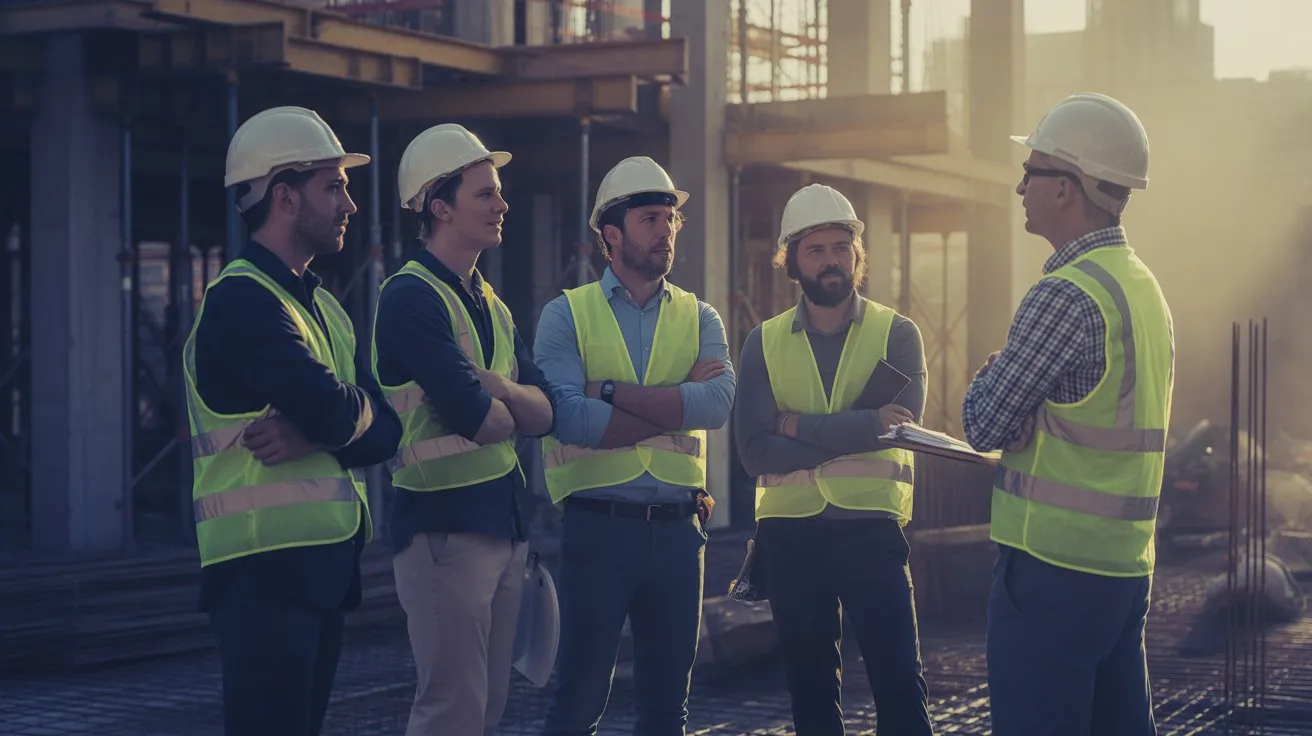
Who is the frontline safety supervisor and what do they do
Across regulatory frameworks — from OSHA in the United States to the Health and Safety at Work Act in the UK, to ISO 45001 globally — the frontline supervisor is the person who oversees work activities and ensures that safety directives are carried out in practice.
Their responsibilities are primarily operational and field-based, with a direct impact on the quality of the overall HSE system. These are the daily actions that ensure rules are not just written, but actually followed — so that workers operate safely.
In practice, their duties include:
Operational oversight Ensuring that tasks are performed in compliance with procedures and safety measures.
Hazard reporting Identifying and promptly communicating risk situations, non-conformities, or unsafe behaviours.
Immediate intervention Stopping work or securing an area when a serious hazard is detected.
Information management Relaying operational instructions to workers and escalating critical issues to management.
Inspection and audit support Assisting in evidence collection and demonstrating compliance.
The supervisor’s work is essential and cuts across every phase of field operations.
Before work begins: prevention
The frontline supervisor verifies that conditions are safe before work starts:
- Checking the work environment (housekeeping, visible hazards, access routes)
- Verifying availability and condition of personal protective equipment (PPE)
- Ensuring tools, equipment, and machinery are safe to use
- Briefing the team on planned activities and specific risks
During work: active monitoring
This is the core of the role — direct, real-time oversight of field operations.
- Supervising tasks to verify compliance with procedures
- Correcting unsafe behaviours immediately
- Checking proper use of PPE
- Monitoring changing conditions and emerging risks
- Stopping work in case of serious and imminent danger
Managing hazards and anomalies: timely communication
When something goes wrong, the supervisor must act fast:
- Reporting non-conformities, hazardous situations, or near misses
- Activating initial containment measures
- Communicating with safety officers, managers, and HSE leads
- Supporting incident and injury management
After work: lessons learned and HSE improvement
An often underestimated but critical phase:
- Completing inspection reports, site visit records, or checklists
- Collecting evidence (photos, notes, attachments)
- Updating the status of open reports
- Tracking corrective actions
Ongoing activities: the importance of method
Beyond individual shifts, the frontline supervisor also carries out cross-cutting activities:
- Collaborating with HSE and management to improve procedures
- Supporting audits and inspections
- Verifying implementation of corrective actions
- Continuously reinforcing safety awareness among workers
Common challenges in daily practice
Although the role is well defined on paper, several difficulties arise in real-world operations:
- Information collected in unstructured ways (photos in chat apps, handwritten notes, verbal reports)
- Activities documented after the fact, with loss of accuracy and the need to reconstruct details
- Incomplete, fragmented, or asynchronous communication
- Difficulty tracking responsibilities and progress
- Gaps between what happens in the field and what gets recorded in corporate systems
The result is increased operational risk and a less effective HSE system — especially during audits or regulatory inspections.
The value of integrated digital support
A digital system that connects field activities with document management can radically transform the supervisor’s effectiveness. Tools such as mobile apps integrated with desktop platforms make it possible to structure and trace every activity in real time.
How 4HSE transforms the supervisor’s work
1. Real-time evidence collection During inspections and checks, the supervisor can use digital checklists and configurable forms, attaching photos and notes directly in context. This eliminates the need to reconstruct information after the fact.
2. Immediate, traceable reporting Non-conformities, incidents, injuries, or near misses are logged and transmitted in real time, along with supporting evidence such as photographs, measurements, and attachments. Every report becomes a tracked process, not a scattered communication.
3. Clear, standardised workflows Activities follow predefined flows: opening, assignment and management, closure. Progress status is communicated end-to-end. The supervisor and all HSE stakeholders follow the same process.
4. Greater control and visibility Dashboards and monitoring tools provide a clear view of activity status, reducing uncertainty and delays. This improves coordination and reporting capabilities.
5. Continuous audit readiness Every activity is recorded, signed, and archived, creating a complete and always-available history. Audits are no longer critical events — they become reviews of already-organised data.
With the right digital support, the frontline supervisor evolves into a strategic information resource, helping build a safety system that is effective, continuous, and data-driven.
The supervisor’s role remains operational, but the context is increasingly complex and demands adequate tools.
Digitising HSE processes is not just about speed — it means:
- improving the quality of information
- increasing traceability
- reducing risk
- lowering safety costs and turnaround times
- making the system truly manageable
In this scenario, the frontline supervisor is not just an overseer but the point where data originates, takes shape, and feeds business decisions.